
Text: Vera Sacchetti
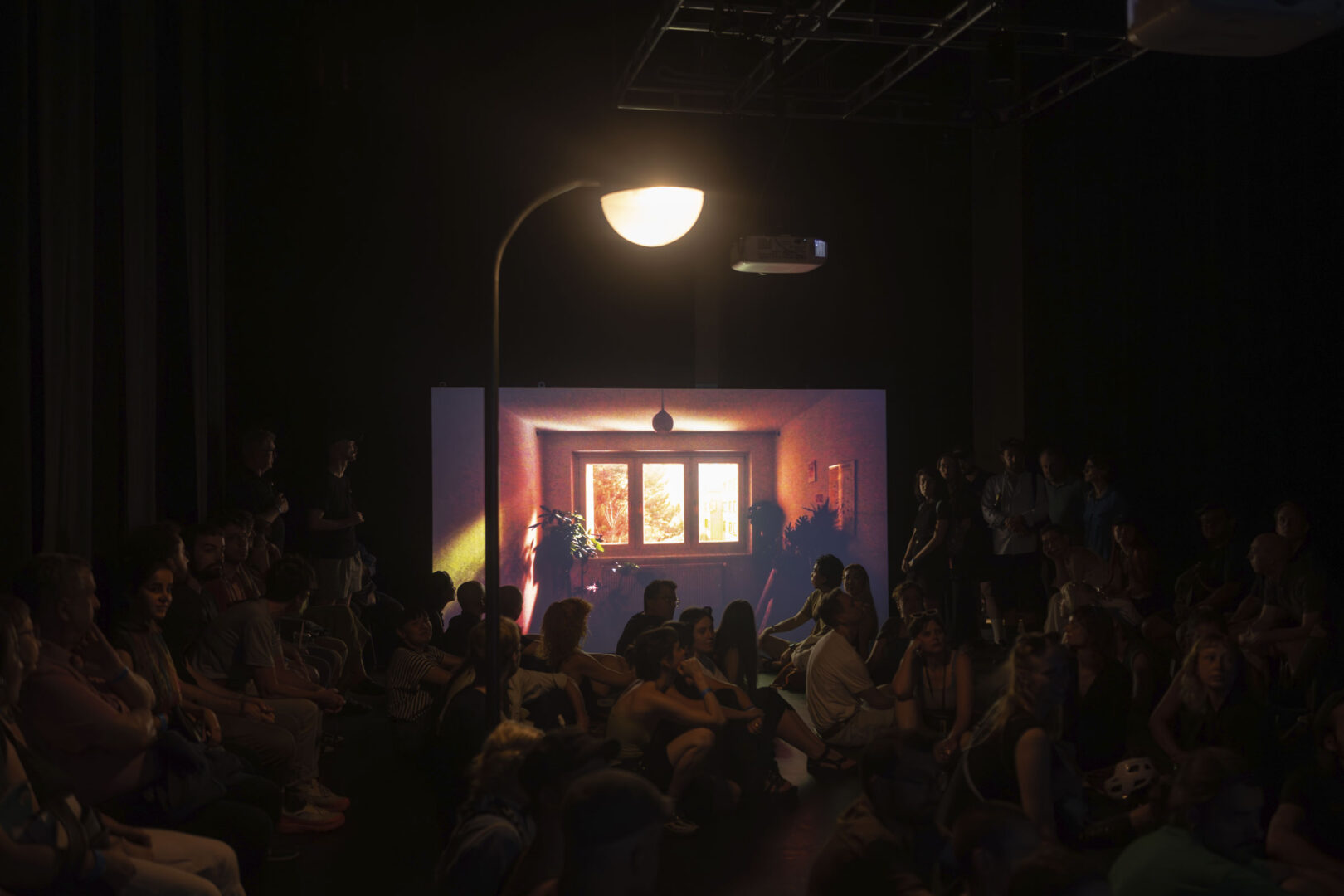
New Year’s Eve in Berlin can be chaotic. As midnight approaches, fireworks, sparklers, and small-scale pyrotechnics are lit up everywhere, filling the air with smoke and noise for hours. One of the most arresting sequences in Bethan Hughes’s Shadowing installation mediates that experience from the perspective of a domestic interior: the walls reflect the cacophony outside, the colors merging in a dreamlike lag that invites the viewer to consider their perception. Is this real? Hughes has experienced this scene herself. The interior we see is her own living room inside an unnamed housing complex in Berlin, a so-called plattenbau: a large-scale estate, designed and built with prefabricated concrete slabs between the end of the 1970s and the early 1980s. Built upon an extensive meadow, the estate stands in contrast to other high-density high-rise buildings of the same period, spreading housing blocks in neatly organized rows and separating pedestrian and vehicular traffic via elevated bridges.
For Hughes, it’s home. She remembers experiencing the cacophony of the fireworks while pregnant in that same living room and later being compelled to record it without knowing what it would lead to. Some time later, a fire broke out under a bridge connecting the two halves of the estate, damaging a building and sparking a media outcry about the failures of integration. Since its construction, the housing estate has changed owners multiple times and fallen into disrepair. At times, Hughes would encounter TV and film crews filming outside, images she would later see in the opening credits of crime shows. Those producing these images used the estate as a backdrop to play out social anxieties, fears, and fantasies—all from a comfortable distance.
Hughes describes the cognitive dissonance of being inside and outside the estate as surreal. “You’re there, you’re physically there within sensory distance of the neighborhood where you live,” she says, “while simultaneously being told what it is like to live there by people who do not have that experience.” The media’s instrumentalization of such images and narratives is pernicious, but common and, for a certain political and societal discourse, useful. “These patterns are played out in every major city and on different scales in countries around the world,” she adds. Exploring this tension became the starting point for Shadowing, in which she combines images, sculptures, and texts to challenge assumptions about the estate and its environment.
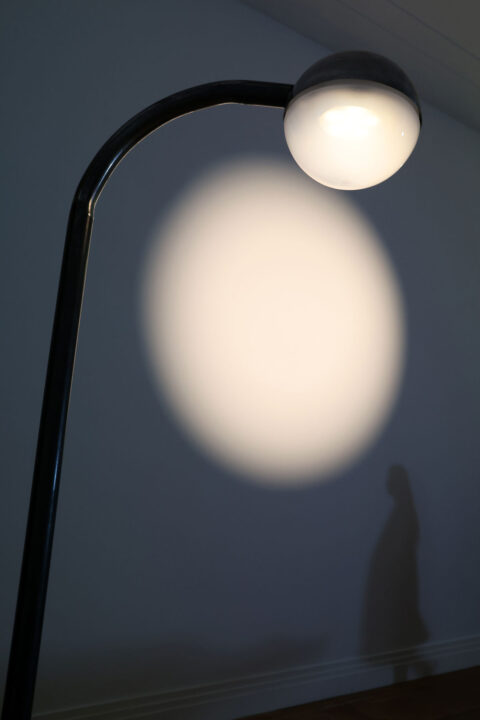
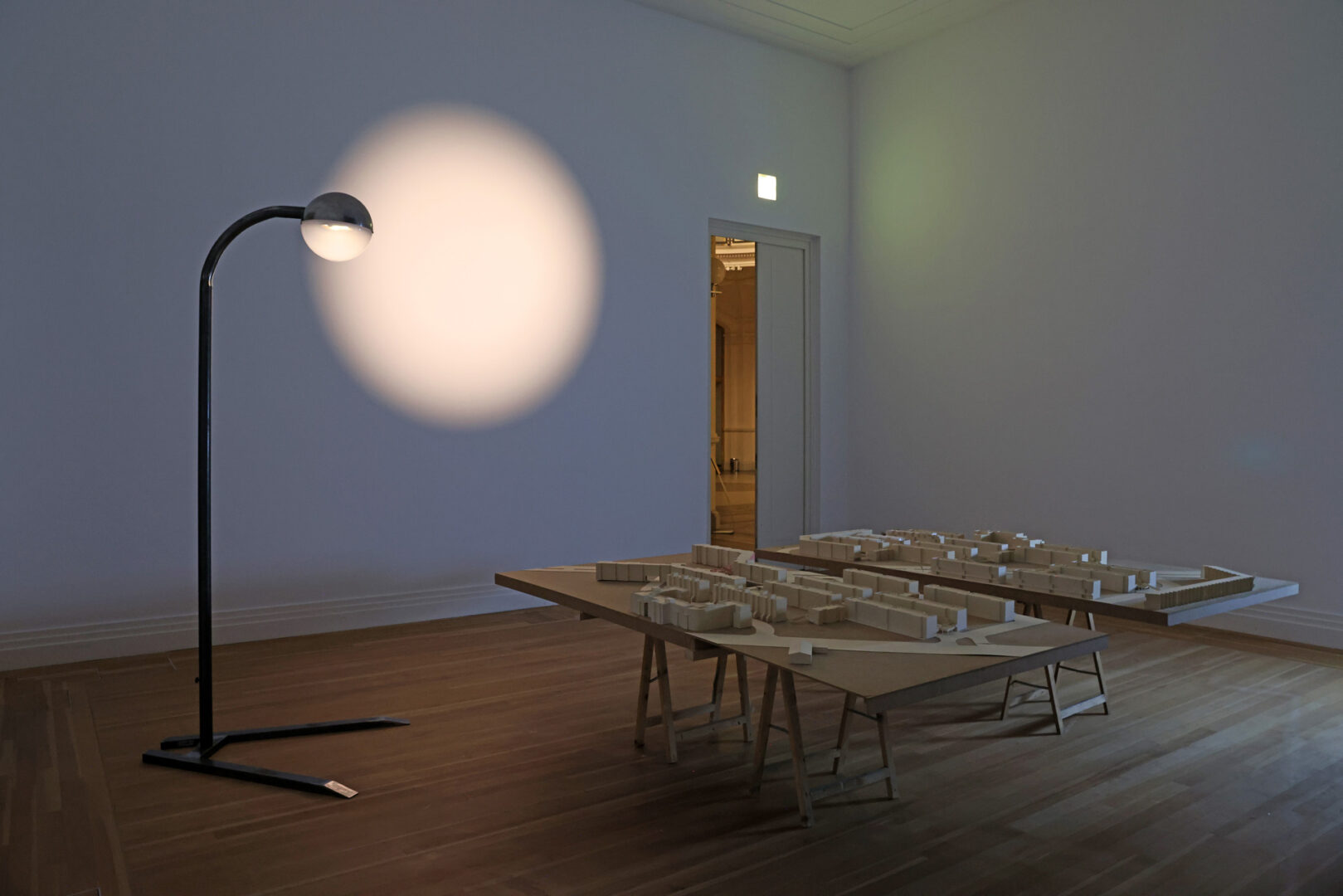
Collecting visual material was a first step. For this, Hughes captured details of life in the estate, but also visited architectural archives, looked at the original plans, and found materials from the opening ceremony. In doing so, she examined the gaps between the seemingly utopian promise of the project and the reality of what was built. At a later moment, she had access to a model of the estate developed by architecture students at the University of the Arts Berlin and filmed it to capture dramatic, captivating visual sequences. The resulting film installation is presented alongside a sculpture of one of the lamps in the estate, a simple design with a spherical globe atop a curved steel stem. Hughes sees an important trace of the political violence surrounding this location in the way these elements register decay and neglect. “They’ve changed the bulbs over the years; they’re all a different shade of white,” she notes. “The lenses are falling off, the glass is smashed, some of them are replaced with plastic versions.”
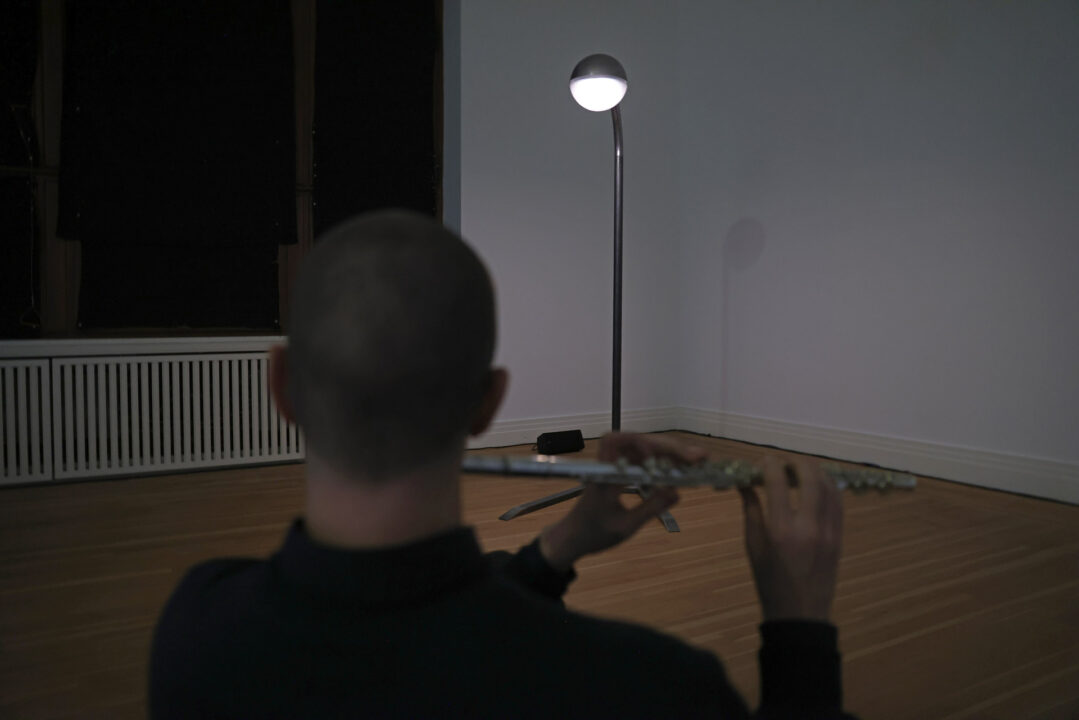
The work is accompanied by a four-channel sound installation composed by Diego Flóres from field recordings captured on site. “Sound became a way to physically ground the piece in the actual place,” Hughes explains. Her Forecast mentor, artist James Richards, describes it as having “skin in the game.” The layering of field recordings becomes a way to represent the residents of the estate without showing their images. While she was collecting material for the installation, she also collected several texts related to the estate, ranging from newspaper articles to political statements. Drawing on these sources, she isolates key fragments and brings them to the screen, creating a new version of the installation scheduled for the European Media Art Festival in April, 2026.
For Hughes, the work continues to evolve. She keeps collecting snapshots of particular moments. Today, they might assemble in a certain manner; as the years go by, they might come together in a different way. The perspective shifts, but the content remains. Shadowing thematically departs from Hughes’ previous pieces, while simultaneously being a highly personal work. It intrinsically embodies her methodology, namely the capacity to zoom into specific material instances—a building, a flower, a camera—in order to see the larger patterns between them.