
Text: Teresa Fazan
Photos: Pauline Ruther
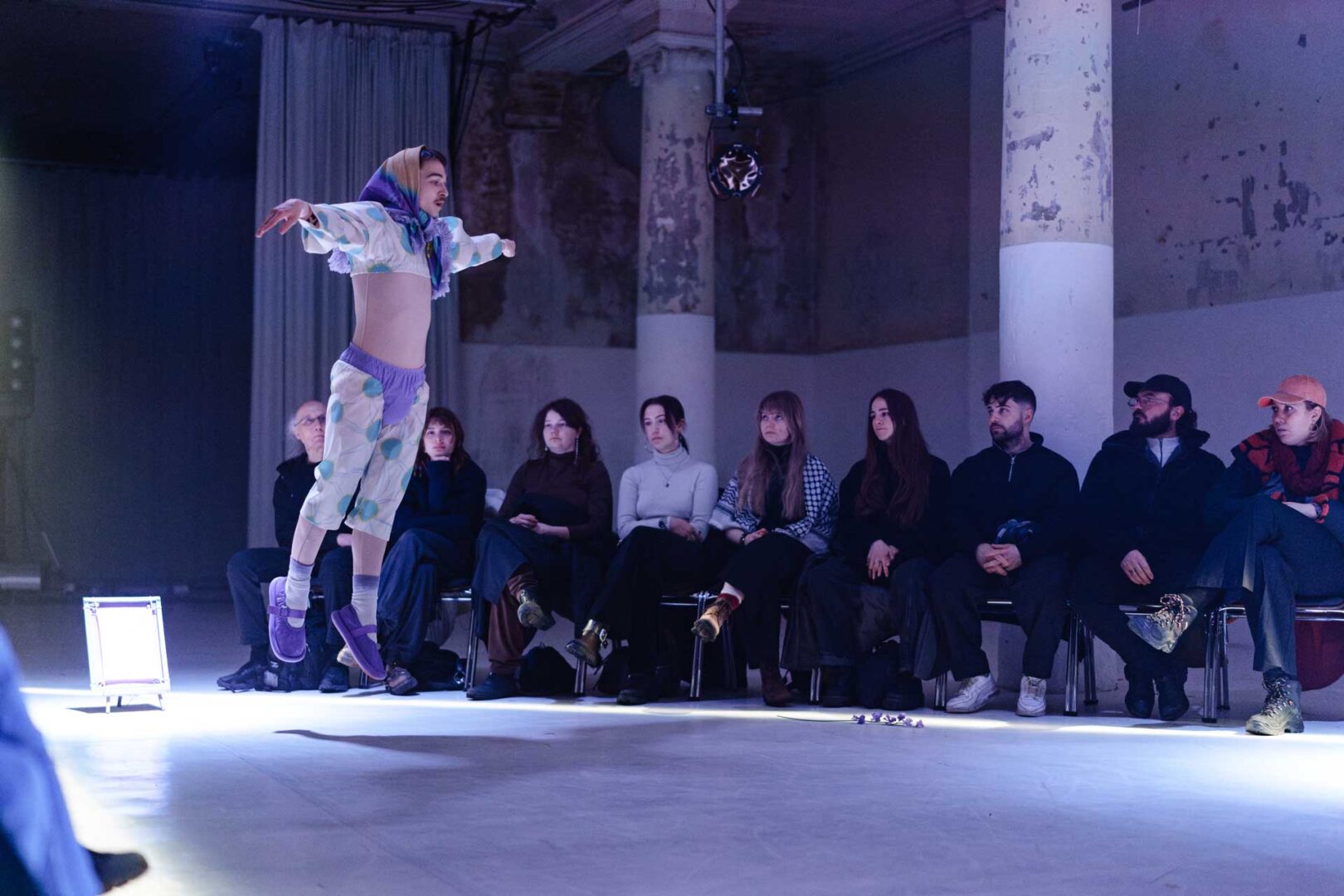
In his solo work SISTERS, premiering at Sophiensaele in Berlin in February 2026, the emerging Polish choreographer Wojciech Rybicki draws on archival material to explore the micro-history of Poland’s transition from communism to democracy in 1989, while also processing the loss of his beloved grandfather. Structured around these two unrelated events, this intimate, séance-like performance confronts the vulnerability of memory and the realization that some events—and some people—are irretrievably lost to the past.
In his research, Rybicki asked whether the political transition—beyond marking a break with the communist past—had also interrupted theatrical productions. He discovered that in May 1990, shortly after the collapse of the regime, a ballet adaptation of Chekhov’s Three Sisters was removed from the program before its premiere at the Wrocław Opera. In the play, the sisters confront the death of their father and yearn for a life they believe they have lost. In mourning their parent, Moscow comes to signify a mythical, vanished world for which they long.
In 2019, nearly thirty years after Poland’s democratic transition, Rybicki presented his first choreographic work. His grandfather, seated in the audience, was forced to leave the theater early due to illness. It was a rupture of a different kind: the performance went on, but his beloved dziadziuś (Polish for “grandad”) never saw it to the end. In SISTERS, these two interrupted stagings intertwine, forming a queer reenactment of what never came to pass. The daughters’ fictional longing merges with a grandson’s real grief, as the archive becomes a space of speculation and fabulation. Rybicki’s search for historical truth transforms into an imaginative confrontation with the ambiguous effects of loss and desire.
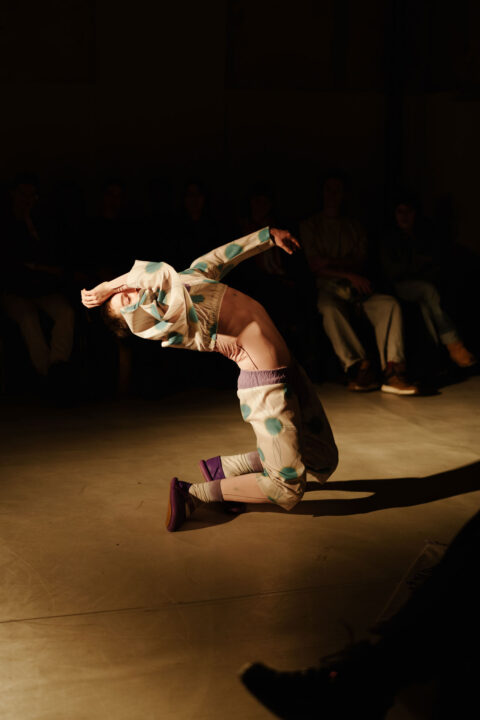
The solo is structured around failure by design. By attempting to reenact a premiere that never took place and reconstruct it through classical ballet—a discipline in which he has no formal training—Rybicki is destined to “fall short” on stage. Yet this failure is distinctly queer: it operates outside the binary logic of success and failure, in the sense articulated by Jack Halberstam in The Queer Art of Failure. In his 2011 book, the American scholar demonstrates that failing might open alternatives to the profit-oriented and success-driven culture of capitalism. Rybicki’s proposal operates precisely in the opening created by consciously engaging with the impossible, suggesting that failure may allow us to learn, experience, and feel what we could not have accessed by striving for a “success.” In accordance with the weak avant-garde’s terms, his performance evades mastery, moving towards discovery and vulnerability.
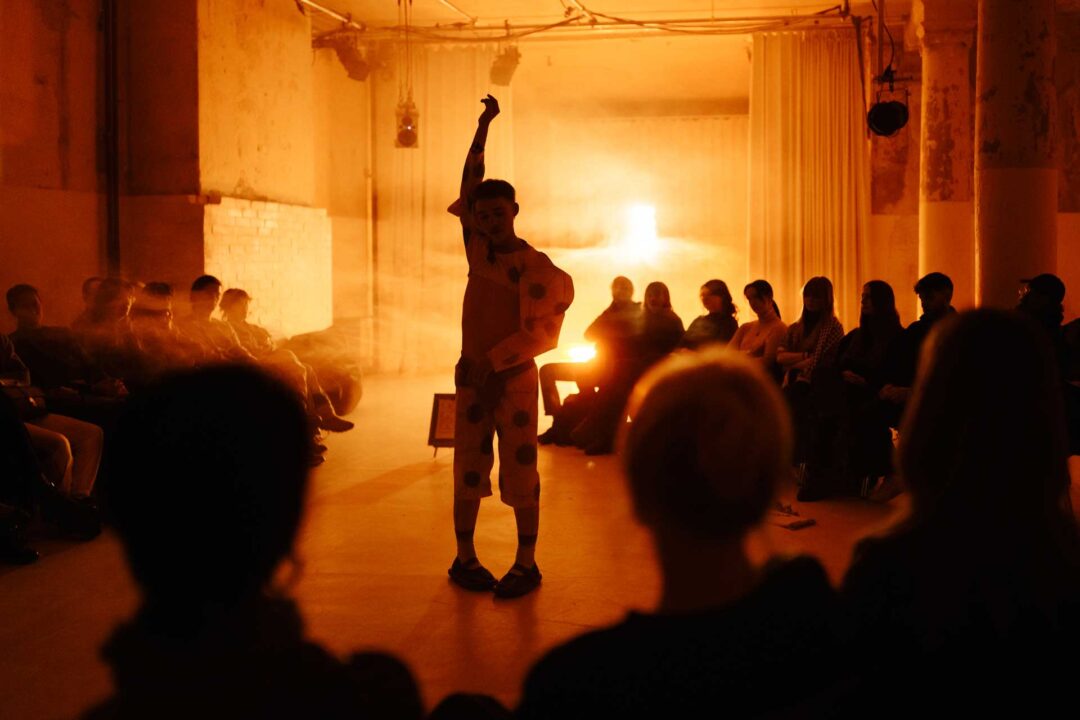
The dramaturgy of SISTERS, co-created by Rybicki and his Forecast mentor Lulu Obermayer, is therefore nonlinear and repeatedly ruptured by the arrival of ghosts. Chekhov’s sisters materialize through a disembodied voice (performed by Aga Ujma) and through shimmering, blinking lights. Their spectral presence is further marked by the empty hands Rybicki reaches out to grasp.
The haunted atmosphere is further intensified by the immersive audiosphere created by Ernest Borowski, in which voices and sounds circulate through the space, evoking an otherworldly presence. The triangular stage is delineated by three easels bearing programs from the Wrocław Opera, with the title of Chekhov’s play crossed out—the only remaining evidence of it ever having been planned in the first place. Standing still and unattended, they resemble tombstones. Accordingly, the performer brings a flower, paying homage to what has been lost to memory.
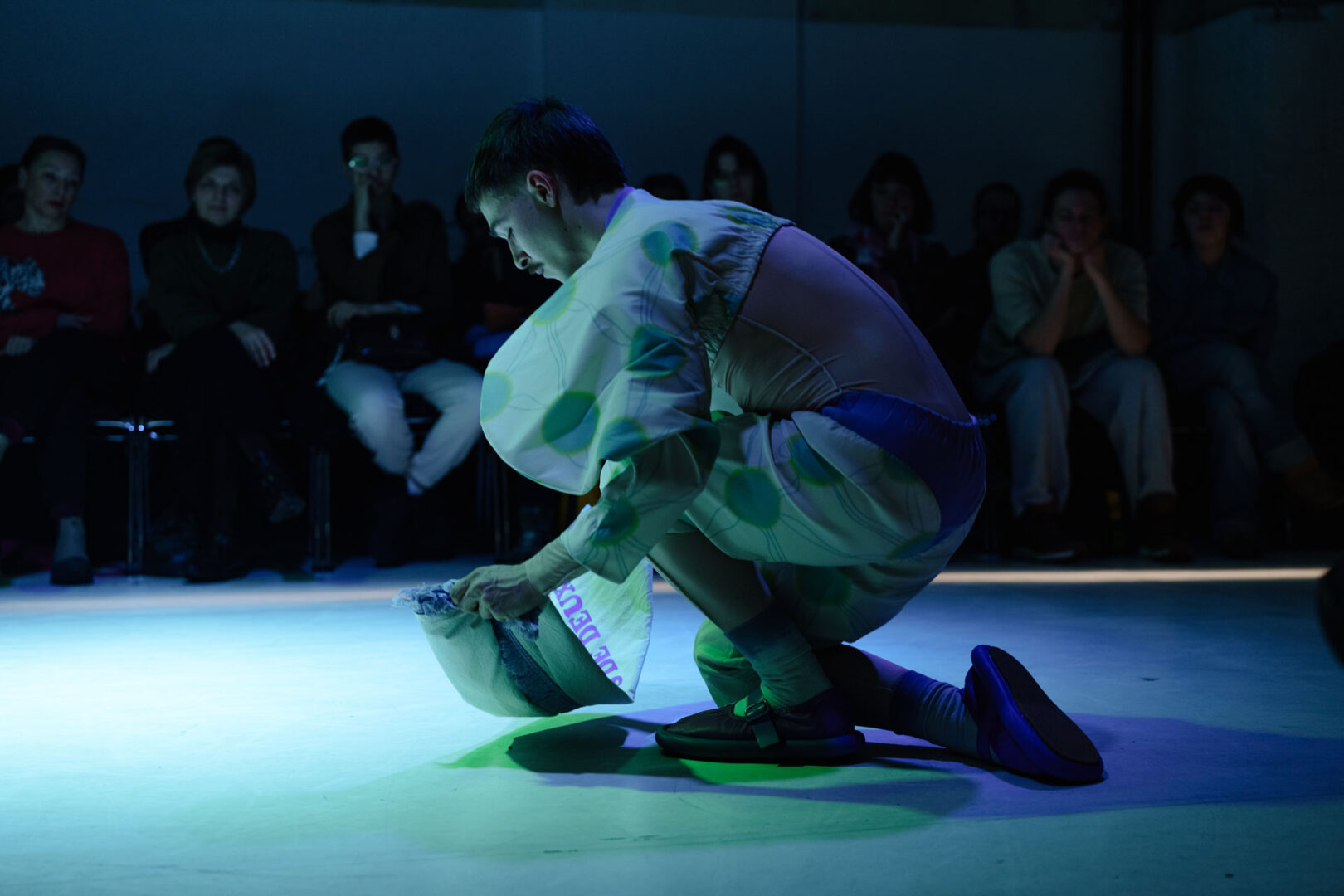
Rybicki dances with the spirits and for the spirits—at times solemn, at times ironic—striving for beauty while accepting imperfection. He jokes, pays tribute, stumbles, and begins again. The pastel-violet costume by Paweł Włodarski is particularly striking. On the one hand, it evokes folk costumes from Central and Eastern Europe, perhaps alluding to the Russian tradition of Chekhov’s homeland; on the other, it recalls the geometric puppet figures of Bauhaus aesthetics.
The exaggerated proportions of the top and shoes make the performer appear even smaller, resembling a music-box figurine or a theatrical puppet. This deliberately diminished figure becomes a powerful embodiment of the impossibility of bringing past (dancing) bodies back into the present. The toy-like presence universalizes Rybicki’s personal archival excavation: we all long not only for family members who are gone, but also—more elusively—for our lost childhood.
By intertwining temporal and geographical planes, as well as private and public spheres, the performance shifts from an aesthetics of haunting toward a practice of healing. Through confronting the impossibility of fully comprehending the past and the necessity of coming to terms with loss, Rybicki proposes a vulnerable poetics of remembrance and letting go.
Choreography, performance: Wojciech Rybicki
Mentorship, dramaturgy support: Lulu Obermayer
Music: Ernest Borowski
Vocal-acting creation: Aga Ujma
Costume, scenography: Paweł Włodarski
Light design: Victor Piano
Teresa Fazan is a researcher and author based in Warsaw, Poland. She published numerous interviews and articles on contemporary dance and choreography, worked in the production of art events, and cooperated with artists as a dramaturg.
This work was produced with the financial assistance of the European Union. The views expressed herein can in no way be taken to reflect the official opinion of the European Union.
Co- financed by the Minister of Culture and National Heritage of the Republic of Poland.

