Forecast 11: The Selected Nominees
These eighteen projects will be showcased at the Forecast Festival, July 16-19
Browse past editions:
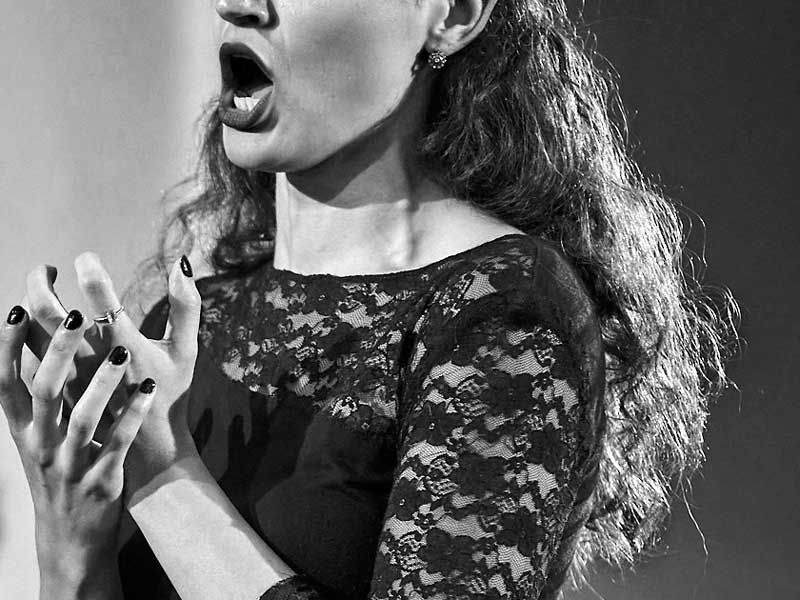
Mariana Carrilho
Flor Do Ibo
Mariana Carrilho is a Mozambican artist and operatic singer exploring the voice as a vessel for the unseen. Her work across music, poetry, audiovisual media, and performance is shaped by classical training and hybrid processes. Her proposal centers on original music, sound, and memory, with the female voice as a site of continuity and resistance. Anchored in Ibo Island, home to the Mwani people, it weaves testimonies and local soundscapes into a musical language blending ancestral knowledge, melody, and chant. Conceived as an homage to her ancestors and to Mwani women facing war and displacement since 2017, it also draws on a colonial-era shop that stood between Black and European neighbourhoods as a metaphor for living between worlds.
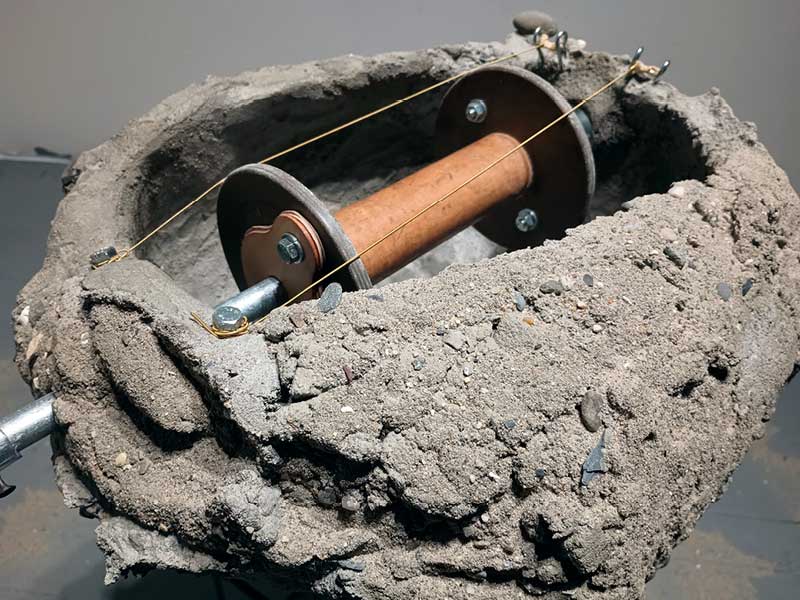
Pablo V Cazares
The Cloud of Unknowing
Pablo V Cazares is an American artist who uses the principles of alchemy to create unique sound experiences with handmade nondigital drone devices. Through the use of simple mechanisms and accessible materials, he engages thresholds and explores psychoacoustic phenomena, confronting the imagined separation between body and spirit. Drawing from the alchemical philosophy of accessing spirit through the working of matter, Cazares is developing a score for The Cloud of Unknowing, a 14th-century treatise on the impossibility of accessing God through the rational mind. As our lives increasingly take place online and by proxy, he seeks to call attention to the value of direct experience in the material world and our capacity for transformation.
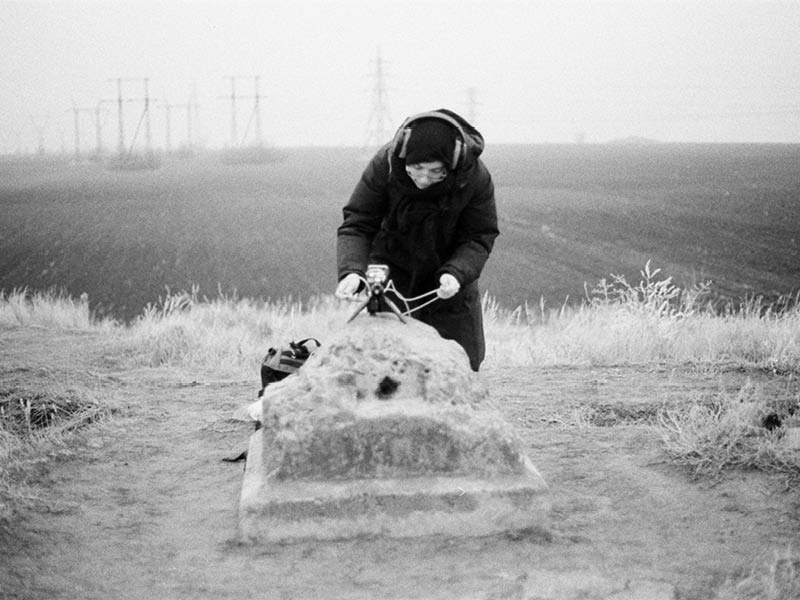
Anna Ivchenko
The Harvest
Anna Ivchenko is an artist and musician working across sound installation, performance, and video. She examines collective and personal memory alongside environmental and political issues, seeking to reconnect disrupted histories and question inherited structures. She proposes a multi-channel audio installation that casts Ukrainian harvest songs and lamentations as metaphors for cycles of life, death, and return. It reflects on occupation as territorial loss and rupture of knowledge and cultural continuity, framing these songs as bridges to those who sowed, harvested, and mourned on those fields before. Through field recordings, modular synthesis, and layered speculative vocals, the work forms a shifting sonic field where voices emerge and fade like soil strata—compressed, unsettled, and reawakened across time.
Brandon Aguirre
Turtle Eggs 4 Sale
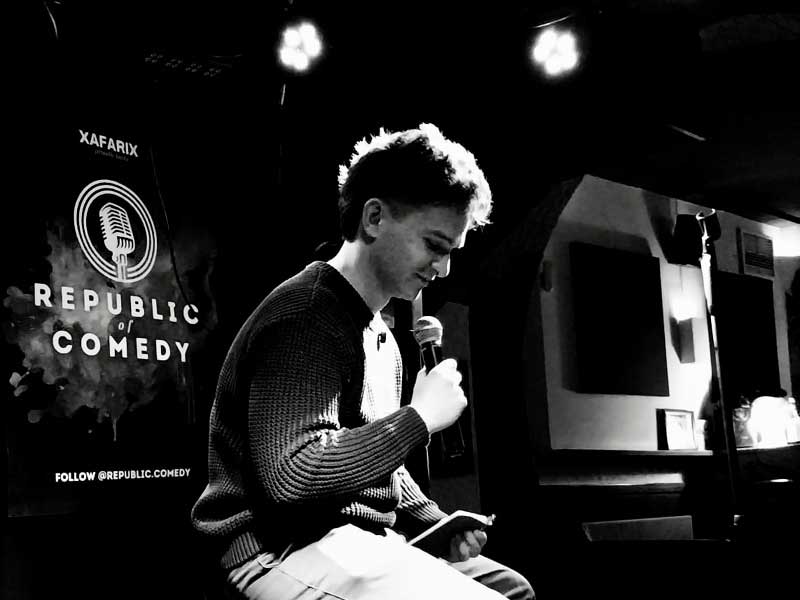
Brandon Aguirre is a stand-up comedian, writer, and producer. His work explores identity, migration, belonging, and the absurdity of taking life too seriously. He proposes a longform stand-up production built around the question of what happens when we stop treating ourselves as fixed characters and begin to see ourselves as in-progress work, an ever-evolving human entity. Rooted in spoken word and direct address, the show moves between personal anecdotes, observations, and abstract ideas, using humor to create a coherent emotional and intellectual arc. The performance explores how migration, work, ambition, and self-image shape the stories we tell ourselves. Developed for an intimate live setting, it aims to offer the insight of another perspective. Not better, not worse—just different.
Siming Lu
Social Death Archive
Siming Lu is a writer and performance maker working with world-building and narrative structures. Her practice constructs frameworks that amplify subtle emotional shifts and fleeting moments, using them as lenses to examine broader social structures. Her proposal examines moments of social awkwardness, embarrassment, and “social death” through constructed situations. Starting from an East Asian cultural perspective, the project explores how social behavior is shaped, misread, and renegotiated in cross-cultural encounters. Through comic timing, fictional framing, and live interaction, the work stages situations in which participants navigate unclear norms, shifting expectations, and subtle social tensions. Blending humor with discomfort, the project treats awkwardness as a productive space where social structures become visible.
Xabiso Vili
The Past Is In Every Direction
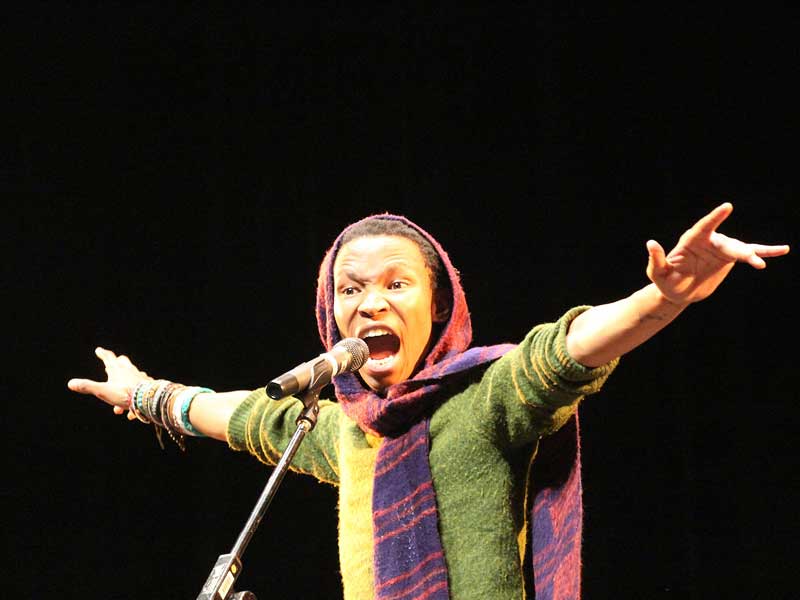
Xabiso Vili is a South African poet, performer, and new media artist. A World Poetry Slam Champion, they weave spoken word, theater, and immersive forms to probe memory, spirituality, and the pulse of contemporary African life. Their proposal explores what happens when humor is asked to hold what it usually releases. The live performance cracks open stand-up comedy, testing how far can the format stretch. How might humor and loss tangle into something richer, releasing real intimacy between performer and audience? Moving between poetry and stand-up, the performance sits with sorrow, memory, and discovery, without rushing to resolve them. Shifting imperceptibly between joke and poem, it hunts for the new language to name the weight we all carry.
Lena Becerra
Gestational Interface
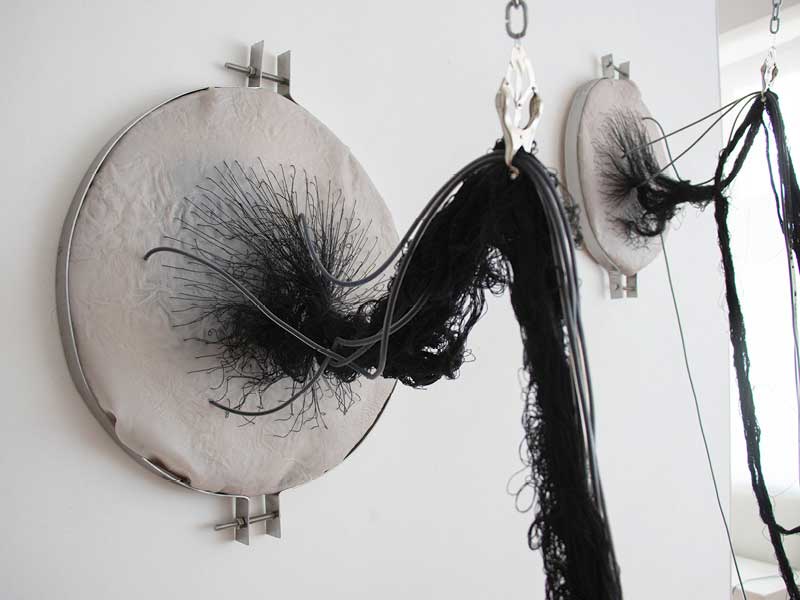
Lena Becerra is an artist and researcher working across media to explore prosthetic ecologies and speculative anatomies at the intersection of art, philosophy, science, and technology. She proposes an immersive installation composed of body-scale prosthetic ecosystems that circulate, leak, and respond to proximity. Wearable elements extend the body, linking sensation and movement to a larger responsive system. Through sensors and feedback loops, the work activates vibration, pressure, and shifting tensions. The installation evolves continuously, unfolding through activation and moments of choreographed engagement. It also foregrounds its mechanisms—tubing, fluids, and structure—thus inviting attunement to breath, gesture, and shared transformation within a permeable, living environment.
Amy Chiao
The Post-Gilbreth Way Workshops
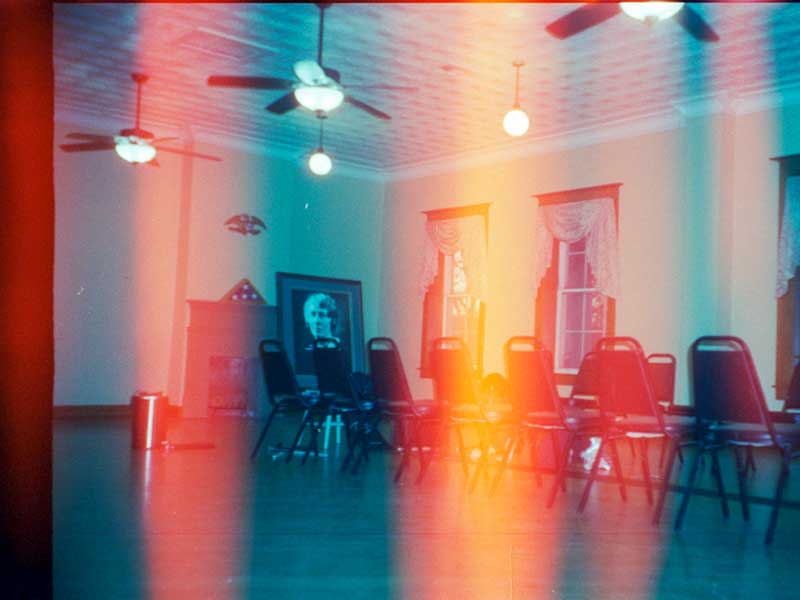
Amy Chiao is a multimedia artist, designer, performer, and director working across site-specific performance, installation, collage, and video. Her practice explores the constructed nature of society through dramaturgy, narratology, and speculative design. In this participatory series that reimagines Lillian and Frank Gilbreth’s Time and Motion Studies—which categorized fatigue as “humanity’s greatest unnecessary waste”— Chiao draws from her experience as a CMF designer in robotics to create assembly line scores that foreground the human sensory experience. Using imprecise timekeeping, anthropomorphic design, and micro-expression scripts, the project proposes arational forms of repetitive labor that move toward embodied, non-drudgerous states of being.
Jiaqing Mo
Love of the Angel
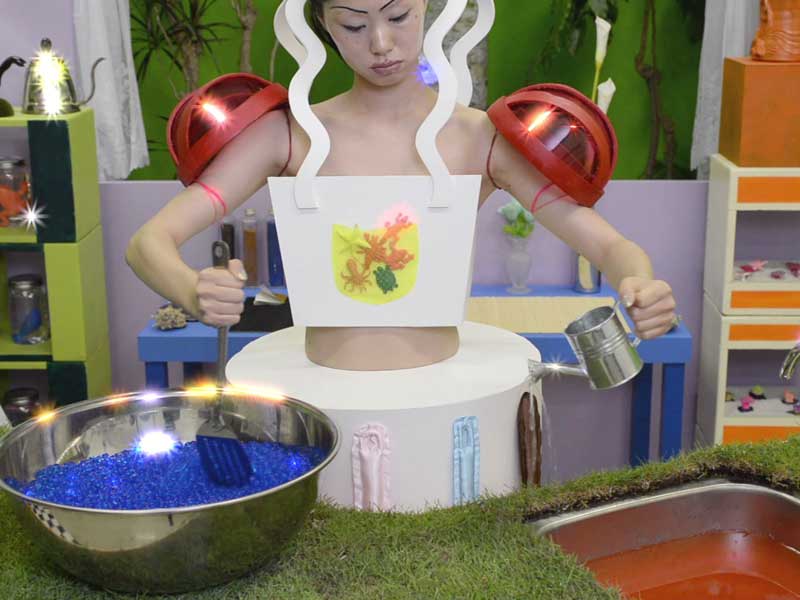
Jiaqing Mo is a visual artist and filmmaker whose interdisciplinary practice spans film, photography, installation, and text. She explores psychological states and fractured communication, often creating dreamlike atmospheres in her work. Central to her approach is the feeling of “dissociation,” of simultaneously inhabiting and observing a situation. Her proposal follows a deaf-mute angel who heals through touch, and a one-legged man who repeatedly returns to be treated. But his experimental surgery fails. Set across surreal environments, the work uses absurdist fiction to examine nonverbal communication, intimacy, and longing. The project unfolds through a multi-channel film installation, sculptural settings, staged photography, and a hybrid fictional diary.
Camila Flores-Fernández
Specters of Extraction
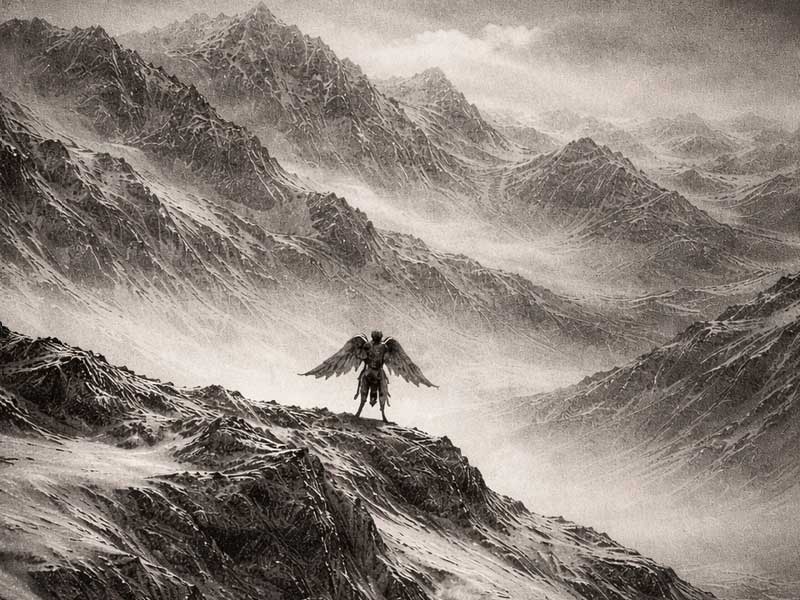
Camila Flores-Fernández is an artist working across documentary, installation, and research on memory, extractivism, gender, and collective resistance. She revisits the Andean myth of the Pishtaco as a historical response to colonial violence and reframes it as a lens for contemporary algorithmic extraction. The tale of a pale monster with metallic wings who steals body fat and eyes from Indigenous peasants emerged in colonial Peru and intensified under modernization, foreign exploitation, and neoliberal authoritarian regimes. Fat signifies labor and life force; eyes, knowledge and witnessing. Today, extraction extends to data, images, and memory through AI systems. Using archival material, video, and generative AI, the project reimagines the Pishtaco as a figure of algorithmic capitalism.
Poyuan Juan
Stanford Bunny and the Memorial Site
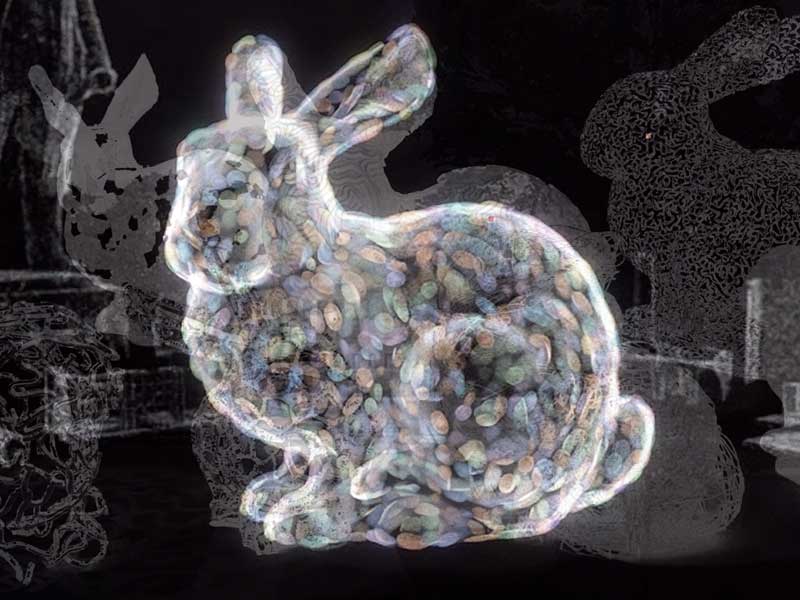
Poyuan Juan investigates the cultural afterlives of digital platforms, focusing on online games, virtual environments, and technological obsolescence. At the intersection of digital archaeology and new media, Juan uses game engines and 3D-imaging tools to explore cyberqueer narratives and the material conditions of virtual experience. This proposal explores digital sovereignty and memory warfare melding Russian bunny folklore and the Stanford Bunny—a 1990s computer graphics test model—into a geopolitical allegory on occupied heritage. With leaked data, Juan reconstructs dismantled Soviet statues, rendering monuments as flickering probabilistic memories. By treating ideological monuments as tactical game pieces, this project frames history as a strategic board game where empires manipulate data to occupy the cloud and collective subconscious.
Ana Mikadze
Invisible Threads
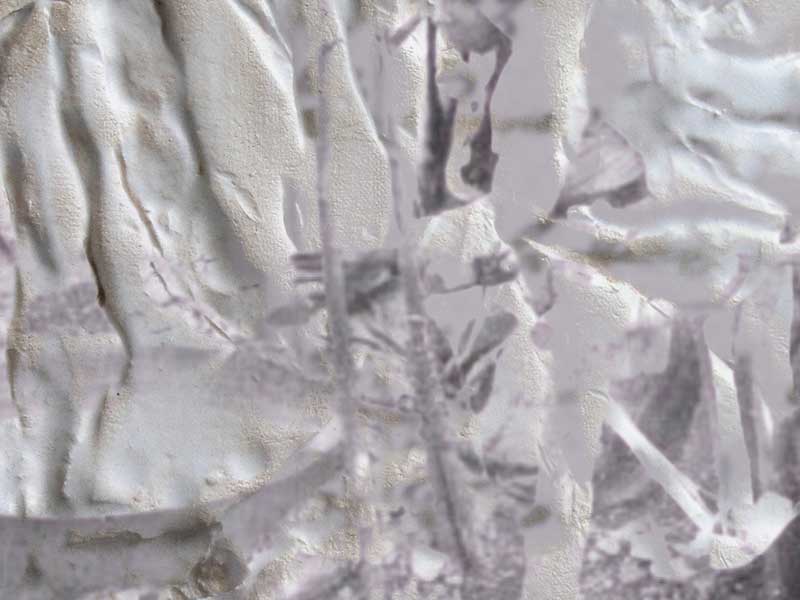
Ana Mikadze is a Georgian artist and researcher of Armenian descent whose work examines imperial legacies in the Caucasus through extractive labor systems. Their performance traces the decimation of silk culture under Tsarist rule in the 19th century, using recovered archival testimonies, escape records, and ritual incantations. Carceral labor bound women as well as silkworms to imperial productivity, dismantling sericulture’s ancient cosmological relations between peoples, insects, seasons, and sacred practice. With spatial narration and storytelling they ask how can fragmented knowledge be inherited and what forms of care persist. Positioning the Caucasus within a broader inquiry into imperial erasure and embodied memory, archives turn into sites of recovery, mourning, and speculation.

Emilie Largier
Sleep, My Love
Emilie Largier is a French multidisciplinary artist, physical theater performer, and theatrer maker working across performance, moving image, and visual arts. Her proposal combines live performance and multimedia installation to explore dissociation and the gradual erosion of trust in one’s senses, leading to fracture. Drawing on illusion as a metaphor for gaslighting and coercive control, it bends perception while revealing its underlying logic. The work treats performance as a space where attention, visibility, and belief are manipulated, inviting the audience into an unstable sensory environment where seeing and knowing no longer coincide. Continuing on her research into domestic violence and its psychological impact, the project seeks forms that articulate what might resist direct representation.
Hsiang-Sheng Teng
Liminal
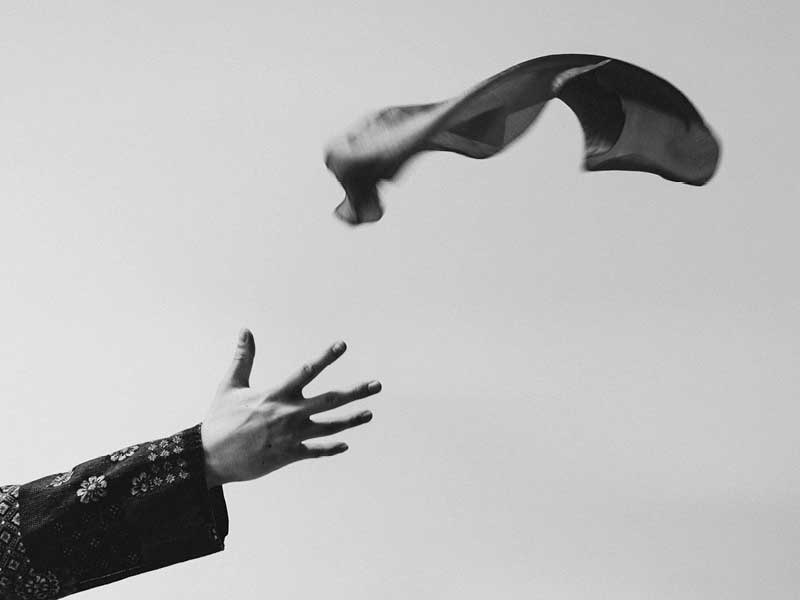
Hsiang-Sheng Teng, also known as Shawn, is a London-based artist and researcher from Taiwan with a background in anthropology. His boundary-defying works include magic, theater, film, photography, installation, documentary, and audio-visual art. In this proposal, Hsiang-Sheng challenges and transforms so-called silk magic—a subgenre of classical conjuring and performance magic—by re-examining it through the frameworks of live art and performance art. The project explores the “in-betweenness“ of East and West; eternal and ephemeral; performance and life; illusion, and the reality it creates. Informed by devising processes and scholarly research, Hsiang-Sheng proposes a new aesthetic language to contextualize and re-situate classical conjuring and performance magic within the field of the performing arts.

Chris Yarnell
Perpetuity
Chris Yarnell is a theater-maker and director creating visually driven performance that combines movement, illusion, and live storytelling. His work explores the tension between control and collapse, blending theatrical and cinematic languages to construct precise, image-led worlds. This solo performance examines humanity’s relationship to time, death, and loneliness through an immortal character who has lived for over 2,026 years. It considers what it means to exist beyond natural limits, where routine and endurance distort the self. Using clowning, movement, illusion, and a tightly structured relationship between live action and sound, the project develops a contained performance system designed for ongoing accumulation. At its core, it asks what remains of a person when no endpoint exists to shape a life.
Helen Anna Flanagan
Blind Spot
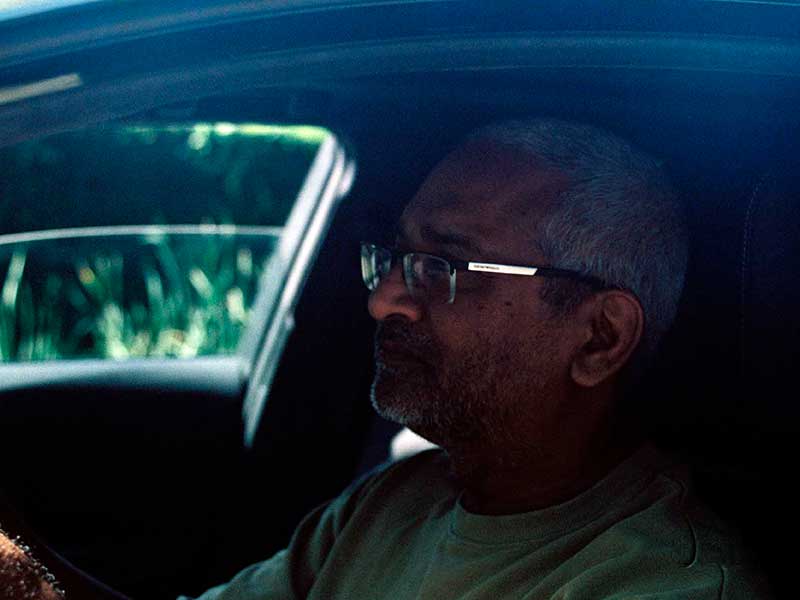
Artist and filmmaker Helen Anna Flanagan’s work explores tensions tied to power dynamics, anxieties, desires, and fantasies to examine how individuals navigate their place within society and construct their identity. Her latest film Blind Spot is a sketch for an experimental documentary centered on Radj, a Rotterdam-based Surinamese driving instructor. Radj is obsessed with photographing the sky through the open car window. The film follows him and his son, Aryan, as they set out on a simple task: to capture the sun. Driving through Rotterdam, they move between exam routes and locations that hold personal significance. Through their shared activity, the film gradually reveals a father–son relationship shaped by time, work, and creative exchange, while tracing a way of seeing informed by movement, repetition, and attention.
Nadir Sönmez
About
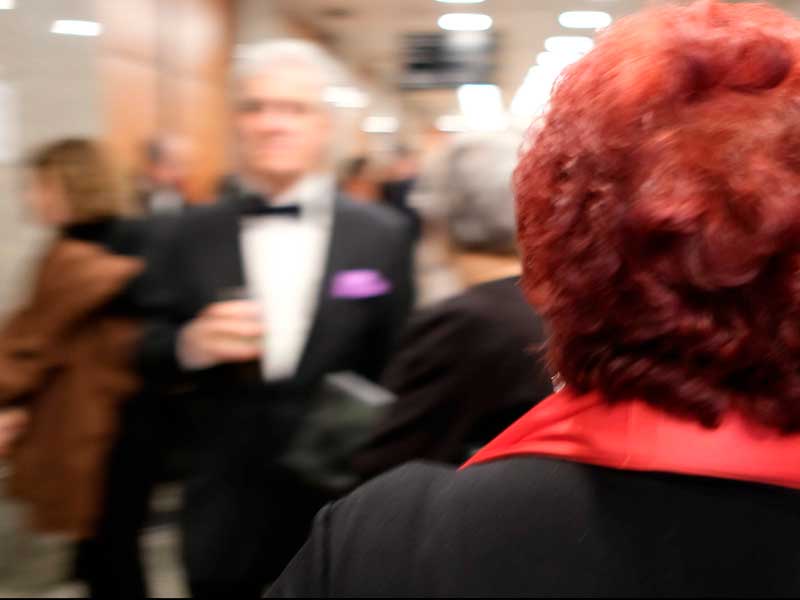
Nadir Sönmez is an actor, writer, director, and interdisciplinary artist. His work across theater, performance, and film draws on acting theory, visual anthropology, psychology, self-help literature, and porn studies to explore intimacy, class, autobiography, masculinities, queer activism, and gay tourism. About documents the artist’s mother as a prolific performance artist, newly discovered in her sixties, honoring a lifetime of domestic work. The film captures her tastes, relationships, and travels while questioning distinctions between amateur and professional image-making. Drawing on his own trajectory within Turkey’s art world, Sönmez uses this project to transfer hard-won privilege to his mother, challenging who is recognized as an artist. The film is accompanied by text-based performances exploring love, career, and friendship.

Mahesh Subramaniam
Tomorrow Morning, I’m Leaving
Mahesh Subramaniam is a filmmaker and writer. Raised on folktales and half-remembered films, he explores the threshold between reality and hyperreality in his work. He approaches stories as living entities—fragile presences that surface at the edges of memory before receding. Shaped by research and fabulation, his practice spans experimental documentaries, short films, short stories, and installations. He proposes an expanded-cinema work that takes an impending departure as its premise. A city becomes a collage of half-remembered images, unfinished conversations, and drifting narratives, shaped through an autofictional approach marked by curiosity and hesitation. The work unfolds as a spatial arrangement of photographs, text, moving images, and everyday objects, gathered into the portable form of a suitcase.